The Dynamics of Hotel Pricing: Strategies, Challenges, and Future Trends
Introduction
The hotel industry is a multi-billion-dollar global market that depends heavily on pricing strategies to attract guests and boost revenue. Hotel pricing, therefore, plays a crucial role in the success and sustainability of the sector. This article explores various aspects of hotel pricing—including strategies, challenges, and future trends—by examining the current landscape and analyzing factors that influence rates. Our goal is to provide insights into how hotels can optimize pricing to stay competitive in a dynamic market.
The Importance of Hotel Pricing
Hotel pricing is not just about setting the right rates; it is a complex process involving understanding market dynamics, guest behavior, and the competitive landscape. Effective pricing can increase occupancy rates, drive higher revenue, and improve guest satisfaction. Conversely, poor pricing decisions may lead to lost revenue, lower occupancy, and a negative impact on a hotel’s reputation.
Market Dynamics

The hotel industry is shaped by external factors such as economic conditions, seasonality, and local events. For example, during peak tourist seasons, hotels may raise rates to leverage high demand. In off-peak periods, they might offer discounts to attract guests. Grasping these market dynamics is essential for setting competitive prices.
Guest Behavior
Guest behavior is another critical factor in hotel pricing. Different guest segments have varying price sensitivities and preferences. Business travelers, for instance, may be more price-sensitive on weekdays, while leisure travelers might be willing to pay premium rates on weekends. Hotels need to analyze guest data to tailor pricing strategies to distinct segments.
Strategies for Hotel Pricing
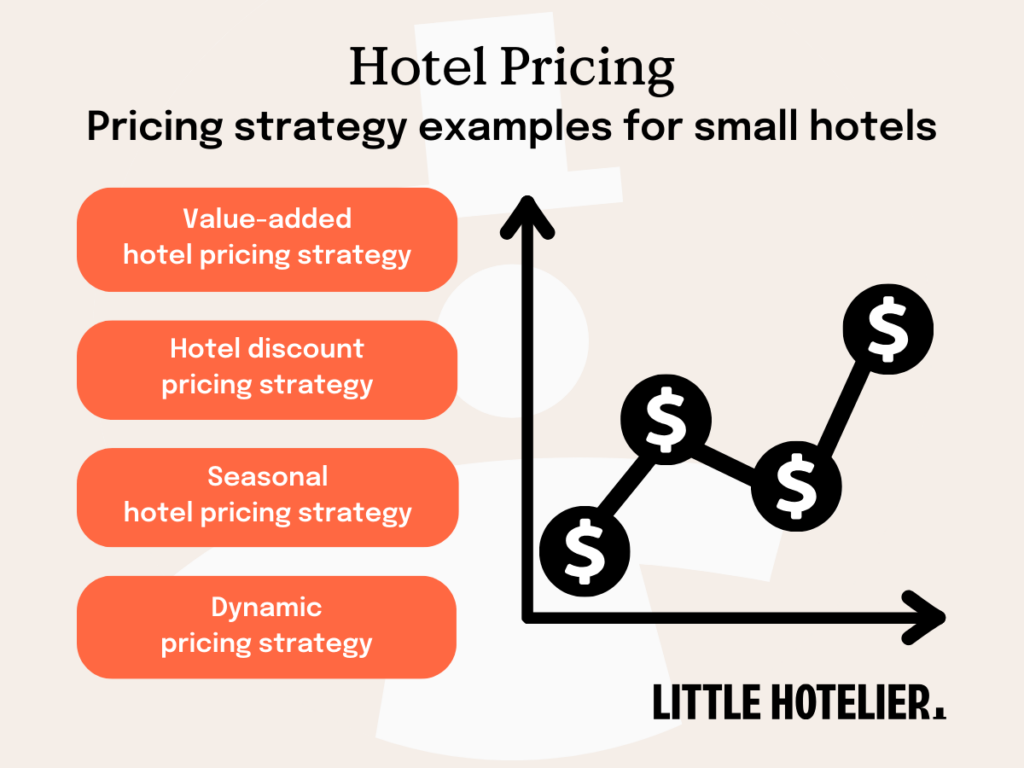
Dynamic Pricing
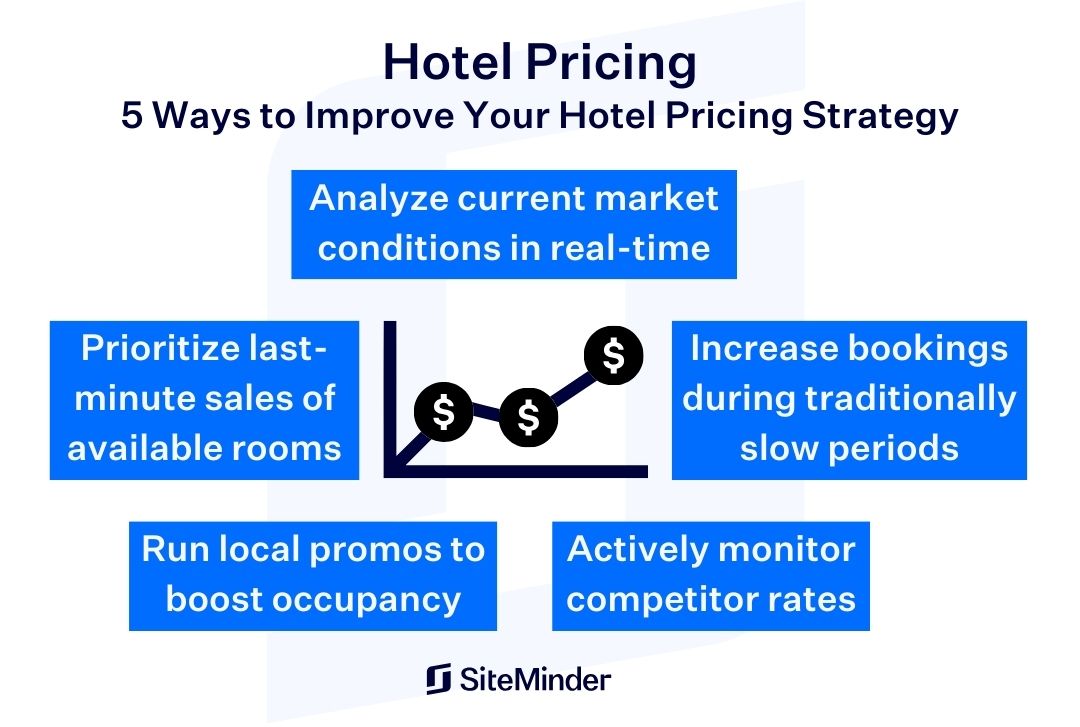
Dynamic pricing is a strategy where hotels adjust rates based on real-time demand and other factors. This approach helps maximize revenue by charging higher rates during peak demand and lower rates during off-peak times. Many modern hotel management systems now include dynamic pricing features, making it easier for properties to implement this strategy.

Bundle Pricing
Bundle pricing involves offering packages that combine multiple services or amenities at a discounted rate. This can be an effective way to increase revenue and enhance guest satisfaction. For example, a hotel might offer a bed-and-breakfast package that includes breakfast and Wi-Fi access at a lower combined rate than if these services were purchased separately.
Competitive Pricing
Competitive pricing means setting rates that align with or are slightly lower than those of competitors. This strategy helps attract price-sensitive guests looking for the best value. However, it is important to ensure the hotel’s service quality and amenities justify the price point.
Challenges in Hotel Pricing
Overpricing
Overpricing can lead to lost revenue and lower occupancy. If a hotel’s rates are significantly higher than competitors’, guests may choose to book elsewhere. Thorough market research is essential to set competitive rates.
Underpricing
Underpricing can also harm a hotel’s revenue. While discounts may attract guests, they can create the perception that the property is of lower quality. Finding the right balance between competitive pricing and profitability remains a key challenge for hoteliers.
External Factors
External factors like economic downturns, natural disasters, and geopolitical shifts can impact hotel pricing. These factors often cause fluctuations in demand and occupancy, making it difficult to maintain consistent pricing strategies.
Future Trends in Hotel Pricing
Personalization
As technology advances, hotels will offer more personalized pricing strategies. By analyzing guest data, properties can tailor rates to individual preferences and behaviors, boosting satisfaction and revenue.
Artificial Intelligence
Artificial intelligence (AI) will play a major role in hotel pricing. AI algorithms can analyze large volumes of data to predict demand and optimize pricing in real time, helping hotels stay competitive and maximize revenue.
Sustainability
Sustainability will become a key factor in hotel pricing. As more consumers prioritize environmental consciousness, hotels focusing on sustainability may charge premium rates—for example, by offering eco-friendly amenities or energy-efficient practices.

Conclusion
Hotel pricing is a complex, dynamic process requiring a deep understanding of market dynamics, guest behavior, and the competitive landscape. By implementing effective strategies and staying updated on trends, hotels can maximize revenue and enhance guest satisfaction. As the industry evolves, adaptability and innovation will be crucial for remaining competitive.
Recommendations and Future Research
To further improve hotel pricing strategies, the following recommendations are proposed:
1. Invest in advanced data analytics tools to gain deeper insights into guest behavior and market trends.
2. Develop personalized pricing strategies tailored to individual guest segments.

3. Foster a culture of continuous learning and innovation within hotel organizations.
Future research should focus on:
1. The impact of AI and machine learning on hotel pricing.
2. The role of sustainability in hotel pricing and guest perception.
3. The effectiveness of different pricing strategies across various market segments.
By addressing these areas, the hotel industry can continue to evolve and thrive in an increasingly competitive and dynamic market.